Posts

Pharmacovigilance

Image
  Pharmacovigilance Nothing is an ideal drug; hence, no one can deny the risk of adverse drug reactions and toxicity in pharmacotherapy. So, it needs to record all adverse and unintended effects of a drug that is experienced by the patient or treating doctors. The adverse drug reactions (ADRs) are the pharmacological effect(s), other than known/ desired effects, at a particular dose. Pharmacovigilance is the observance of pharmacotherapy for the detection, assessment, understanding, and prevention of unintended effects, adverse drug side effects, or any other possible medication error, caused by a pharmaceutical product. Pharmacovigilance promotes systemic, rational use and assures confidence in the safety of drugs. It improves patient care and safety, public health, and safety. The adverse drug reactions (ADRs) may be of the following types – 1.      Adverse Event/Experience (AE): during treatment with a pharmaceutical product, the appearance of any drug in...
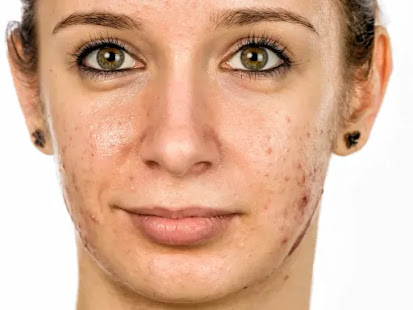

Dunbal/muhansa (Acne / pimples): Don't worry, it may be Physiological

Image
Acne is a skin disease that is the result of inflammation of gudda dahnia (oil glands), due to this hair follicles become blocked with oil (sebum) and dead skin cells. Acne is whiteheads, blackheads, or pimples. Acne is most common among Adolescence age, though it may affect people of all ages.  Common sites: Acne typically causes pimples to develop, most commonly on your face, chest, shoulders, and upper back. The temperament of Adolescent age is Hot-moist, but hotness is a dominant quality that causes amraz-e-damwi and sometimes amraz-e-safrawi. The temperament of Adolescence favors the occurrence of Acne. Treatment: Hot-moist temperament of adolescents is normal. Any deviation in temperament may cause other developmental disorders. Hence in the treatment of acne, generally, drugs for systemic administration is not preferred. Or if it should be given then it must be mild. Gaza. ( Ghaza Husn-e-afza of Hamdard): for local application. Make a paste of the powder ...

Samn Mufrat (Obesity )

Image
Overweight and obesity are of medical concern due to excessive fat accumulation. For adults, WHO defines overweight and obesity as follows: overweight is a BMI greater than or equal to 25; and obesity is a BMI greater than or equal to 30. Body mass index (BMI) is a simple index of weight-for-height that is commonly used to classify overweight and obesity in adults. It is defined as a person's weight in kilograms divided by the square of his height in meters (kg/m 2 ). BMI provides the most useful population-level measure of overweight and obesity as it is the same for both sexes and for all ages of adults. However, it should be considered a rough guide because it may not correspond to the same degree of fatness in different individuals. For children, age needs to be considered when defining overweight and obesity. It is caused by Sū-e Mizāj (Morbid temperament), that leads to excessive and abnormal accumulation of humours that should be evacuated, The obese per...

Leucorrhoea: Is a mood irritating discharge?

Image
Sailanur Reham (Pathological Leucorrhoea) is a mood irritating discharge from the female genital tract, experienced by most the women ever in her life. leukorrhea, or leucorrhoea , is flow of a whitish, yellowish, or greenish discharge from the vagina that may be physiological or pathological. Such discharges may originate from anywhere in female genital organs, like, ovaries, fallopian tubes, or, most commonly, the cervix. physiological Leukorrhea is common during pregnancy, the ovulatory phase of the menstrual cycle, and at the time of libido is considered normal, this discharge is thin, watery, and relatively odorless. But pathological leucorrhoea is a disease condition that occurs due to a change in temperament of the female genital tract or whole body. Generally, inflammation and itching of the genital tract are associated with leucorrhoea. Treatment: 1. Safoof Sailan: 5gm Twice a day 2.Furzeen: this is a suppository drug form, for cleaning the uterus. Mode of Administration: 2 su...

Aamar-e-Advia (shelf-lives of Unani drugs)

Image
Aamar-e-Advia ( shelf-lives of Unani  drugs) Aamar-e-Advia is a life period of a drug until it retains its therapeutic property. It is defined as "the peri time during which an active pharmaceutical ingredient or a finished pharmaceutical product is expected to remain within the approved shelf-life specification, provided that it is stored as per the conditions outlined on the container label".   Aamar-e-Advia is also known as the expiration dating period, or conformance period, shelf-life of a drug. Crude drugs are obtained from zoological, botanical, and geological sources, if these drugs are used therapeutically without compounding, then it called Mufrad  (single) drugs. when after compounding from these crude drugs various formulations are prepared, called Murakkab  (compound) drugs. The factors affecting the medicinal properties of a drug are methods of cultivation, collection, preservation, storage, and climatic condition. Authenticated drugs sh...

Storage of Unani Drugs

Image
    Collected crude drugs must be free from all types of impurities, such as foreign materials, animal excreta, insects, fungus, or any substances other than the drug. The optimum environmental condition should be maintained during the storage and transportation of a drug to avoid any damage or loss of properties. Appropriate conditions of light, humidity, ventilation, temperature, and security should be ensured.   Extreme conditions of temperature fluctuations and humidity may result in harmful toxic degradation that can be difficult to detect. Any change in the normal physical property of a drug, like a change in color, odor, etc is an indication of abnormality. Drugs must be prevented from petrification, decomposition, fermentation, or any unusual changes. There are specific guidelines for handling specific drugs that should be followed. Factors considered for proper storage are Sanitation, Temperature, Light, Moisture, Ventilation, and Segregation . Storage areas sh...

Effects of Celestial Bodies on Drugs

Image
     Celestial bodies or heavenly bodies are objects in space such as the sun, moon, planets, and stars. These Celestial bodies affect the entire mavalid-e-salasa (plant, animal, and mineral kingdom). The life of living organisms including growth and reproduction are directly influenced by gravitational and electromagnetic forces exerted by Celestial bodies and indirectly by the effects of Celestial bodies on climatic conditions. Ancient physicians described that a major impact ate exerted by the 7- Celestial bodies. These are Shams (Sun), Qamar (Moon), Zehel (Saturn), Mushtari (Jupiter), Mareekh (Mars), Zohra (Venus), and Atarad (Mercury). The revolution of Celestial bodies from east to west on earth is called “zamana-etasharruf” and the revolution from west to east is called “zamana-e-haboot”. The effects of a Celestial body are more pronounced in zamana-e-tasharruf than in zamana-e-haboot. The bitterness in fruits, the falling of leaves, the sweetness of nectar, etc of...